
Care at Virtue Recovery — Corbett
The Corbett Street campus in northwest Las Vegas
Virtue Recovery’s Corbett Street campus provides adult medical detoxification, residential addiction treatment, and a dedicated residential eating-disorder program at 9230 Corbett Street in Las Vegas, Nevada. The current official description organizes care across six villas, with separate spaces for detox, eating-disorder treatment, and other residential care. Every client is described as having a private room and an en-suite bathroom. This profile concerns the Corbett campus specifically, which has a different service mix from Virtue’s outpatient location and its sister adolescent program elsewhere in Las Vegas.
The campus may be relevant to someone entering addiction treatment, a person who needs withdrawal management before residential therapy, or an adult seeking the dedicated eating-disorder pathway. The initial assessment determines the appropriate starting point. The campus’s own description emphasizes alcohol and multiple-substance use among common presentations, with methamphetamine, opioids, benzodiazepines, and cocaine also named. Its primary admissions number is 866-461-3339. The proposed admission should identify Corbett Street and the intended villa or clinical pathway before travel is arranged.
Detox and the move into residential treatment
Medical detox takes place in a dedicated villa with nursing available around the clock. Virtue describes registered and practical nursing coverage, physician oversight, and daily physician visits during acute withdrawal. The published orientation is approximately one week, with the duration assessed individually. That is a general description of the service rather than a personal medical timetable. Recent substance use, prescriptions, physical health, psychiatric concerns, and earlier withdrawal experiences all contribute to the receiving team’s decision about suitable monitoring and care.
Medication-assisted treatment is part of the campus’s published offer, including methadone in appropriate cases. The official page specifically mentions case-by-case tapering, so the listing should not be interpreted as a guarantee of an ongoing maintenance prescription for every patient. Someone already prescribed a medication needs a clear review of continuity, the plan during the stay, and the next prescriber after discharge. The clinical assessment should settle these arrangements rather than leaving them to assumptions based on a general medication-service label.
After detox, a patient may transfer to a residential villa for further clinical work when appropriate. Others can enter residential care directly following medical approval, and the eating-disorder pathway has its own admission considerations. A move between villas should preserve the relevant medical and therapeutic information and clarify the next stage’s goals. The financial proposal should also distinguish the phases. A daily detox rate and a daily residential rate refer to different services, even when both are provided within the same campus.
Therapy for addiction and co-occurring concerns
The Corbett page lists individual sessions, group work, cognitive behavioral therapy, dialectical behavior therapy, motivational interviewing, and EMDR among its approaches. Trauma and post-traumatic stress are named alongside co-occurring mental health needs. The actual plan is developed with the clinician and should identify which methods fit the patient’s presentation. Campus-specific availability and timing matter, particularly for trauma processing. A website’s list of approaches does not mean every resident receives the same set of interventions or identical hours of individual therapy.
Cognitive behavioral work provides a structure for examining patterns around substance use and the situations that sustain them. DBT-related skills can support work on distress, emotions, and relationships, while motivational interviewing gives space to explore the person’s own reasons for change. At Corbett, these methods sit within a residential routine of groups, individual contact, and community life. The useful clinical explanation connects the methods to recognizable concerns and describes how the resident will practice and review skills during the stay.
The campus also describes several forms of recovery community participation: 12-step meetings, SMART Recovery, Refuge Recovery, and Celebrate Recovery. These have different formats and perspectives, so their presence offers material for a discussion of personal preference and ongoing support. Community meetings complement the clinical program and are not interchangeable with psychotherapy or psychiatric appointments. A resident can use the stay to understand which forms of connection are suitable and which can realistically continue in their home community after discharge.
The dedicated eating-disorder villa
Eating-disorder care is a distinct pathway at Corbett, with a dedicated villa and a registered dietitian involved in treatment. Virtue identifies anorexia, bulimia, binge eating, avoidant or restrictive food intake, and other eating-related concerns within its wider program information. It also describes treatment when eating difficulties and substance use occur together. The assessment should establish which condition is primary, the person’s medical stability, and whether the residential setting can provide the required level of nutritional, psychiatric, and medical support.
The provider’s eating-disorder information describes an initial dietitian assessment, individualized meal planning, chef-prepared food, meal support, nutrition education, and work around food and body image. Its named approaches include eating-disorder-focused cognitive behavioral work and a separate binge-eating protocol, alongside broader clinical therapies. These details help distinguish the pathway from an addiction program that only offers general dietary advice. The actual meal support and therapy schedule should be explained for the proposed admission and adjusted to the person’s clinical needs.
Virtue’s published eating-disorder scope also identifies limits: the program is not a substitute for a hospital when medical stabilization, tube feeding, or a higher level of medical care is needed. A person requiring that support should receive the appropriate assessment before a residential arrival is planned. When withdrawal management is necessary alongside the eating-disorder presentation, the provider describes completing detox first and then continuing within the campus. The sequence and communication between teams should be explicit in the admission plan.
Private rooms within a shared villa community
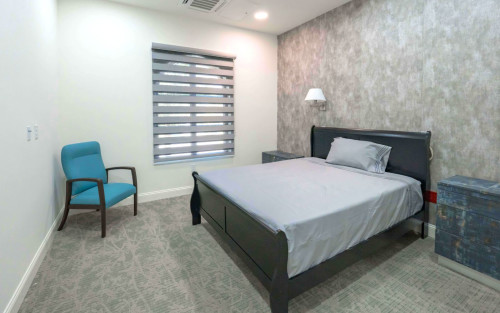
Corbett’s accommodation is more specifically described than a general private-room option. The official campus page says each resident has an individual room and private bathroom at every level of care. Bedrooms open toward communal great rooms with high ceilings, fireplaces, and garden views. The villa layout creates shared spaces for interaction while preserving a separate sleeping room. The actual room, bathroom accessibility, and any mobility or sensory requirements still need confirmation, particularly when a particular layout affects whether the placement is workable.
The campus includes gardens and shared indoor areas used for daily community and group activity. Meals are prepared on site, with dietary input described in the program. A private room does not make the entire stay a one-to-one program: therapy groups, dining, recovery meetings, and other routines involve peers. Someone comparing privacy should therefore consider both the bedroom arrangement and the treatment schedule. These are separate features, and neither alone describes the level or frequency of individual clinical contact.
Daily routine, devices, and family contact
Virtue’s sample Corbett day begins with nursing and medication contact, followed by breakfast, morning and afternoon therapy groups, an evening recovery meeting, and later family contact. Time between groups is part of the published routine. The timetable is an orientation rather than a fixed schedule for every person or villa. Detox patients, eating-disorder residents, and people further into residential addiction care may have different immediate priorities. The team should explain how the schedule changes according to the assigned pathway and clinical needs.
The campus describes a 48-hour break from cell phone use during detox, with access to a house phone, and a return to personal phone access when the patient enters residential care. This is a location-specific policy that should be confirmed before arrival. A person with essential family or work obligations needs a practical communication arrangement rather than an assumption of unrestricted device use. Family therapy and contact can support the plan, with participation organized around the resident’s needs and information-sharing preferences.
Veteran admissions and the next stage of care
Veterans are treated within the same villa model, including detox and residential pathways, with the official campus describing extended residential care of up to 90 days where authorized. The provider also describes access through VA community care and a liaison who helps coordinate the process. The individual’s VA team must initiate and approve the relevant referral. These arrangements do not establish automatic eligibility, a guaranteed length of stay, or payment for every proposed service simply because the applicant is a veteran.
When a lower level of care becomes appropriate, Corbett describes coordinated referrals to partial hospitalization and intensive outpatient services in the local community. Those services involve treatment during scheduled hours rather than living within the Corbett clinical program. The discharge plan should identify the receiving provider, housing, transport, appointments, and any continuing medication arrangements. A person returning outside Nevada needs a plan that works in the home location, including records transfer and a clear understanding of who takes responsibility for ongoing care.
Daily fee evidence and financial planning
The exact Corbett Recovery.com profile inspected on October 20, 2026 displays estimated cash-pay rates of $2,000 per residential day and $2,500 per detox day. These are third-party estimates, not tariffs published by Virtue or a confirmed total for a particular patient. They should remain separated by care level. A monthly multiplication does not establish a package price, and an eating-disorder admission may require its own explanation of inclusions. The provider should quote the assessed pathway, expected duration, and any separate charges in writing.
Virtue describes working with commercial insurance and PPO plans, with out-of-network benefits considered where applicable. It also identifies local employer and union plans among those it can assess. Coverage depends on the actual policy, care level, and authorization, so a listed carrier or employer is not a promise of payment. The financial discussion should explain remaining patient responsibility, what is included, and how an extension or transition affects costs. Those details make comparisons more useful than a headline daily figure alone.
Compare Corbett with other treatment centers in the United States and the programs in the Nevada treatment guide. The campus’s specific features are its villa organization, individual bedrooms and bathrooms, medically monitored detox, dedicated eating-disorder pathway, and multiple recovery meeting formats. Their relevance depends on the person’s assessed needs and the actual plan for clinical care, accommodation, payment, and continuing support.
Sources reviewed October 20, 2026: official Corbett campus page, Virtue residential program, eating-disorder care, and exact-campus third-party pricing. Program and accommodation claims are provider-reported; quoted estimates are not individual offers.
Conditions
Levels of care
Settings
Amenities
Treatment approach
Individual and group therapy, CBT, DBT, motivational interviewing, trauma therapies, dietitian-led eating-disorder care, medication support, recovery meetings and continuing-care planning
Fees & admissions
USD 2,000 / day
Recovery.com’s exact Corbett profile displayed estimated residential USD 2,000/day and separate detox USD 2,500/day on October 20, 2026. These are third-party rates, not a provider tariff or combined package. Confirm the assessed pathway, eating-disorder care if relevant, duration and inclusions.
Confirm the current program, duration, accommodation and included services directly with the center.
Confirm Corbett-campus placement, whether the daily rate includes detox, medication, meals and specialist services, and the expected length of stay.