This North Carolina guide compares 3 selected treatment campuses profiled in Clinical Recovery. This guide compares the listed options by clinical purpose, residential setting and practical admission questions rather than treating every program as interchangeable.
Scope: centers already published in the Clinical Recovery directory.
listed international option
THE BALANCE
For US private clients and families considering treatment beyond North Carolina, THE BALANCE offers a residence and individual schedule dedicated to one client. Residential care is in Mallorca, Spain, or Zurich, Switzerland, not the United States.
The provider describes multidisciplinary mental-health and addiction care, authorized family involvement and continuing-care planning. Confirm clinical suitability, the proposed duration, travel, medical support, written fees and US follow-up responsibilities. Acute care or stabilization may be needed first.
COGNIFUL
COGNIFUL offers personalized residential care in Mallorca, Zurich and London, with individual clinical appointments and an agreed care plan. These are international treatment locations, not a US facility. Confirm the receiving program, travel arrangements and continuity with the person’s home clinicians.
Promotional international feature, separate from the domestic ranking. Provider information checked September 18, 2026.
THE BALANCE website: https://thebalance.clinic
How this shortlist was selected
This is an editorial reading order of distinct campuses with overnight residential or inpatient care. It is not a claim that every program is clinically appropriate or a complete survey of every provider in North Carolina. “Private” describes a care or payment setting and does not guarantee a single room. Center profiles preserve the source and check date for their facts and any pricing evidence.
Compare the North Carolina shortlist
| Center | Location | Care model to compare |
|---|---|---|
| 1. CooperRiis – The Farm at Mill Spring | Mill Spring, North Carolina | Residential |
| 2. Red Oak Recovery — Ellenboro Residential Campus | Ellenboro, North Carolina | Residential clinical treatment with accommodation |
| 3. CooperRiis – Asheville Residential | Asheville, North Carolina | Residential |
1. CooperRiis – The Farm at Mill Spring
CooperRiis – The Farm at Mill Spring is listed in Mill Spring, North Carolina for Residential. Compare its clinical scope with the exact level of care recommended after assessment.
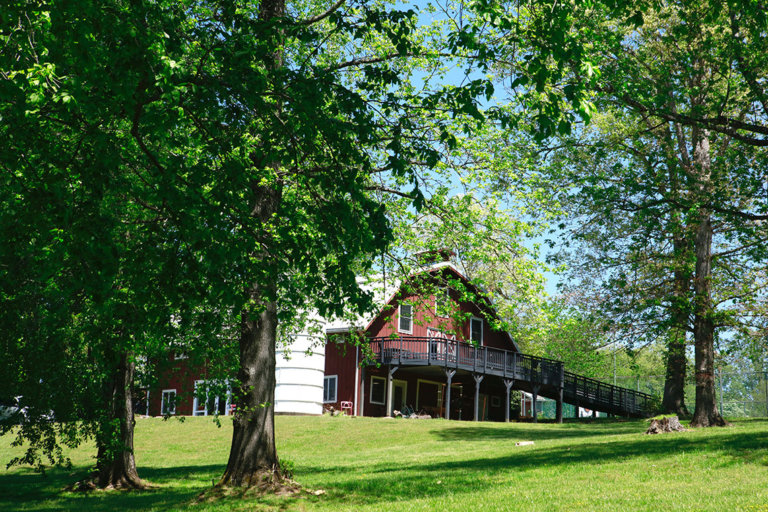
Accommodation: The 94-acre working farm has three lodges accommodating 36 residents in private bedrooms with private bathrooms. Shared spaces include lodge lounges, gardens, an art barn and a woodshop.
Treatment approach: Therapeutic community, structured work and wellness activities alongside individualized mental health care.
Pricing context: Official main Farm fee checked September 17, 2026: USD 28,000/month, including private room/bath, meals and community programming. Psychiatry, outside physicians, medication, supplements, transport and personal costs are extra. Extended care later falls to USD 15,000/month; that lower-care phase does not meet this directory’s premium-price focus.
Ask admissions: Ask whether the main Farm program or extended-care pathway is proposed. Confirm psychiatric appointments and charges, readiness for community activities, and plans for eventual step-down support.
Read the full center profile, photographs and source record · Provider information. Profile information checked: 2026-09-17.
2. Red Oak Recovery — Ellenboro Residential Campus
Red Oak Recovery — Ellenboro Residential Campus is listed in Ellenboro, North Carolina for Residential clinical treatment with accommodation. Compare its clinical scope with the exact level of care recommended after assessment.
Accommodation: Residential campus at 517 Cub Creek Road, distinct from the Leicester Mountain Campus
Treatment approach: Men-focused addiction treatment, co-occurring needs, experiential therapy, family involvement and continuing support
Pricing context: Recovery.com lists USD 23,000 per 30 days for the Ellenboro residential campus. This is a third-party cash-pay estimate, not an official provider tariff. The directory also describes longer courses; do not assume the total stay costs only USD 23,000. Confirm current program eligibility and an itemized treatment-and-accommodation quote, including detox, medication and continuing-care charges. Checked 2026-09-16. Price source: https://recovery.com/residential/red-oak-residential-campus/
Ask admissions: Confirm the Ellenboro address, current age criteria, room arrangements, treatment length, detox requirements, included medical services and family/aftercare arrangements.
Read the full center profile, photographs and source record · Provider information. Profile information checked: 2026-09-16.
3. CooperRiis – Asheville Residential
CooperRiis – Asheville Residential is listed in Asheville, North Carolina for Residential. Compare its clinical scope with the exact level of care recommended after assessment.
Accommodation: The wooded four-acre site has 24 private bedrooms, with either private or shared adjoining bathrooms. Common spaces include an art studio, exercise areas and dining facilities.
Treatment approach: Individual psychotherapy, psychiatry, skills groups and integrative wellness within a therapeutic community.
Pricing context: Official fee checked September 17, 2026: USD 950/day; calculated 30-day cost USD 28,500, plus a USD 1,000 incidental deposit refundable if unused. Accommodation, meals and programming included. Outside physicians, medication, supplements, transport and personal expenses excluded. Insurance reimbursement is not guaranteed.
Ask admissions: Confirm the intended length of stay and bathroom arrangement, since published duration descriptions vary. Discuss whether discharge should lead to the Farm, community support or local clinicians.
Read the full center profile, photographs and source record · Provider information. Profile information checked: 2026-09-17.
How to choose residential treatment in North Carolina
Start with clinical fit: confirm whether the program offers detox, psychiatric inpatient care, addiction rehabilitation, eating-disorder treatment or longer-term mental-health support. These levels are not interchangeable. Ask who is on site overnight, which medical services are external and how the center responds if care needs change.
Then compare the named campus, room arrangement, proposed length of stay, family involvement and continuing care. Request a written quote that identifies the program and accommodation, and separates assessment, detox, medication, laboratory work, outside consultations, transport and step-down services.
Frequently asked questions
Does the first entry have the best clinical outcomes?
No. The order is editorial and intended to make the comparison readable. Public information does not establish a universally best center, and individual suitability requires an assessment.
Are the prices directly comparable?
Not necessarily. Profiles may contain provider fees, third-party estimates, daily-rate calculations or fees on request. Keep the original duration and inclusions visible, and obtain a current written quotation before deciding.
Compare a therapeutic community with an addiction program
The Farm at Mill Spring and CooperRiis Asheville are described as residential mental-health settings within a therapeutic-community model. Red Oak’s Ellenboro campus is described as a men’s addiction and co-occurring-treatment program. These are different starting points. Ask the assessing professional which clinical purpose should guide the search, then compare the particular program offered at the relevant campus.
A therapeutic community can include structured daily activity alongside clinical work. Ask how individual treatment, group participation, responsibilities and personal goals fit together in the proposed stay. For an addiction-focused admission, clarify withdrawal needs, medical support and the balance of individual and group therapy. A rural setting alone does not explain the clinical service.
Mill Spring, Asheville and Ellenboro
The named locations should appear on the admission offer and travel instructions. If considering both CooperRiis settings, ask how the proposed program differs between them and whether moving between settings is a possibility or a separate decision. Do not assume that a single provider name means that rooms, schedules, staffing and prices are the same.
Consider family participation and the eventual return home as part of the location choice. Ask which sessions can take place remotely, how visitors are scheduled and whether the patient needs transport to outside appointments. If the person will return to another state, discuss the handover early rather than treating aftercare as an administrative task for the final day.
Ask how progress will be described
Before admission, ask the team to explain the initial goals in terms the person understands. A goal may relate to participation, daily functioning, treatment engagement or a specific clinical concern. Ask when goals will be reviewed and how the patient can raise questions about the plan. The review process should make room for changing needs without promising a fixed recovery timetable.
When comparing a longer community-based stay with a shorter residential program, focus on the work proposed and the reason for the duration. A thirty-day price equivalent cannot tell you whether the program can be purchased in that form. Keep the quoted period visible and request a clear explanation of any minimum commitment, extension process and transition arrangements.
Plan an achievable next stage
Discuss where the person expects to live after treatment and what support can continue there. If the program proposes outpatient care, ask for the actual location, schedule and responsible clinicians. If a different organization will take over, confirm that the referral has been accepted and that records can be shared with appropriate permission.
Before paying, bring clinical and practical questions together: the exact campus, admission criteria, room type, duration, included services, family arrangements and next appointments. NIMH’s psychotherapy guidance can help frame questions about qualifications and treatment goals. Our selection guide explains how to compare a private-care proposal without using the setting as a substitute for clinical fit.
If the recommended start date is delayed, ask the current or assessing clinician to identify appropriate support in the meantime. Clarify who will review new information and whom to contact if the person’s situation changes before admission. The arrangements for waiting should be as clear as the arrangements for arrival.
What does a longer residential community commitment involve?
Ask how treatment goals connect to everyday participation, what responsibilities residents have and how progress toward greater independence is reviewed. Clarify the proposed duration, the costs of extending care and the criteria used to discuss a move. A therapeutic community description should lead to concrete questions about daily life and support, rather than an assumption that it is equivalent to a short addiction-treatment package.
Connect the living environment with everyday goals
A person comparing North Carolina programs may be seeking both clinical treatment and support with ordinary routines. Ask how the proposed environment addresses the particular difficulties that prompted the inquiry. A goal such as returning to study, managing household tasks, or rebuilding a daily schedule should be discussed with the team in concrete terms. The provider should explain what it can support within the program and what will require a separate service or continuing help at home.
This discussion can distinguish an appealing setting from a workable plan. Ask how responsibilities are introduced, how progress is reviewed, and what happens when the initial expectations need adjustment. The resident’s own priorities should remain visible alongside professional recommendations. Before discharge, identify which routines can continue in the next setting and who will support them. A general promise of greater independence is more useful when it is connected to agreed activities and available follow-up.
Continue comparing
See the USA guide, the treatment cost guide and the full treatment-center directory.
listed photograph: CooperRiis – The Farm at Mill Spring. It shows that listed facility, not every center in North Carolina. This guide is for comparison and does not replace an individual clinical assessment.