
Care at Recovery Centers of America — Capital Region
A residential campus in Waldorf, Maryland
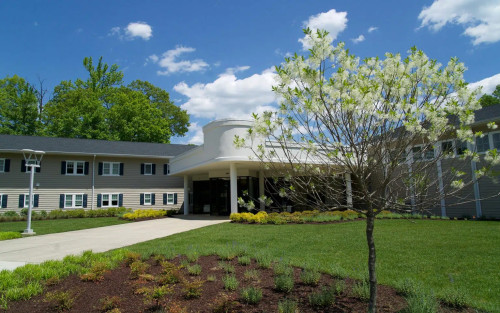
Recovery Centers of America at Capital Region is an addiction treatment campus in Waldorf, Maryland. The official provider describes a 140-bed facility offering medical detoxification, inpatient residential treatment, partial hospitalization, intensive outpatient care, medication-assisted treatment, and recovery housing. It serves people from the Washington metropolitan area and beyond. The campus should be evaluated as a specific Maryland placement, with the proposed clinical program and living arrangements identified, rather than as a general introduction to all services across the RCA network.
The location can be relevant to people in Southern Maryland, Washington, DC, and Northern Virginia who want a treatment setting within the wider region. It also accepts adults traveling from elsewhere. That distinction becomes particularly important when planning care after an overnight stay. A local resident may be able to continue with the provider’s outpatient services, while someone returning to another state may need different clinicians and practical arrangements. The admission plan should begin to address that transition before travel is booked.
Who the published program is designed to support
Capital Region’s current information focuses on addiction and co-occurring mental health needs. It describes pathways for people new to treatment, people returning after a recurrence of substance use, and people who need addiction and mental health care coordinated together. Those groups may share a campus while requiring different priorities in their individual plans. Previous treatment history, current symptoms, medications, and the support available outside the facility are all relevant to deciding the appropriate starting point.
For a person returning to care, the useful discussion is specific to what happened after the last treatment episode. The plan may need to account for difficulties accessing follow-up appointments, an unsuitable living environment, changing medical needs, or a treatment approach that was hard to apply. For someone entering treatment for the first time, more time may be needed to understand the program and develop a workable set of initial goals. The provider’s pathway names should translate into those concrete differences in care.
The campus also describes admission consideration for pregnant people seeking addiction treatment and a priority process for that population. This is a provider-reported service description, not a determination that any particular pregnancy or medical situation can be managed at the facility. Obstetric, psychiatric, and substance use needs should be reviewed together before admission. Similarly, an applicant with substantial mental health symptoms should establish the exact support available at Capital Region instead of assuming that every mental health program elsewhere in RCA is offered at this campus.
Detoxification and residential treatment
When clinically indicated, medical detoxification at Capital Region includes nursing care, monitoring, and medication based on the person’s needs. The provider describes detox as a phase that often lasts up to a week while recognizing individual variation. The purpose of the initial assessment is to determine whether that service is needed and whether the campus can provide the required medical support. The person should give the team a complete account of substances, prescriptions, relevant medical history, and any previous withdrawal complications.
Planning for continued treatment begins during stabilization. That sequence matters because the immediate medical work of detoxification differs from the longer process of therapy, routine-building, and preparation for life afterward. An admission arrangement should explain whether the person is expected to move into Capital Region’s residential program and what needs to be confirmed for that transition. A short stay should not be presented as a complete substitute for any further treatment the clinical assessment recommends.
Residential care means living on the campus within a scheduled program. Capital Region describes daily group work, individual therapy, psychiatric consultation, medication management when appropriate, fitness, and creative activities. The provider gives approximately 30 days or longer as a general residential timeframe, depending on need. That is a planning guide rather than a fixed personal prescription. The resident should understand how the team reviews progress and what factors determine a move to outpatient treatment or another service.
Therapy, psychiatric input, and medications
The clinical approaches listed for Capital Region include cognitive behavioral therapy, dialectical behavior therapy skills, motivational interviewing, and trauma-informed care. The program combines group sessions, scheduled individual work, psychiatric support, and case management. These elements should be linked to the person’s treatment goals. For example, the schedule may need to address recurring situations around substance use, difficulty managing emotions, or the interaction between psychiatric symptoms and recovery. A long list of modalities is less informative than an explanation of their role in the actual plan.
The provider describes cognitive behavioral work in terms of thinking and behavior, and DBT skills in terms of coping with distress, emotions, and relationships. Motivational interviewing allows space to explore a person’s own reasons for making changes. In residential care, the practical test of these approaches is how they relate to daily situations and what opportunities exist to practice them. Individual sessions can focus on personal concerns, while groups offer a different setting for learning and interaction with peers.
Capital Region describes medication-assisted treatment for opioid and alcohol use disorders and specifically lists methadone among its available options. It also lists other medications that may be considered according to the person’s history and assessment. Those published options should not be interpreted as a recommendation to start, stop, or change a medicine. The admission process should clarify whether an existing medication can continue, how prescribing is coordinated during the stay, and how the next treatment team will take over afterward.
Medication continuity is especially important when a person moves between services or returns to a different community. The discharge plan should identify the next prescriber or program, the practical arrangements for attending, and any records that need to transfer. This planning sits alongside therapy and support rather than replacing them. It also helps distinguish what the residential campus provides directly from what must be arranged with a separate outpatient clinician or service.
Accommodation, shared spaces, and everyday routine
The Waldorf campus includes residential rooms, communal areas, a fitness center, laundry, and recreation space. The provider also describes instruments for music and creative activity, including a piano and drums. Its current page states that private rooms may be requested. That should be treated as an availability question for a particular admission, rather than a guaranteed feature of every stay. Existing directory information describes semi-private accommodation, so the assigned room type needs explicit confirmation in the admission arrangements.
Living in a larger residential community involves more than selecting a bedroom. The daily timetable, the balance between clinical sessions and personal time, and the way staff support shared living all shape the experience. Someone with mobility, sensory, dietary, or other access needs should explain those needs before arrival so the campus can respond specifically. Photographs can help show the environment, but they cannot establish whether the available room or program arrangements will suit an individual.
Capital Region advertises WorkFlex, which provides defined access to a phone and laptop for essential work or study during inpatient treatment. The provider also describes animal visits through Pets on Wheels and possible accommodation of emotional support animals on a case-by-case basis. These are separate arrangements. A scheduled visiting animal program does not mean residents can automatically bring a pet, and structured device access does not mean a normal working day can continue unchanged. Both should be confirmed before relying on them.
Outpatient treatment and recovery housing
Partial hospitalization at Capital Region provides an intensive daytime schedule without an overnight clinical stay. Intensive outpatient treatment uses a smaller weekly time commitment and may be delivered in person, virtually, or through a hybrid format. The provider describes both as possible parts of a treatment continuum. Which option is appropriate depends on the clinical assessment and the person’s circumstances, including where they will live, how they will travel, and what support is available when sessions are not taking place.
Capital Region’s Recovery Residence is a separate housing option linked to participation in outpatient treatment. It is described as a structured, substance-free place to live, with meals included. This is useful information for someone who cannot immediately return to a stable home environment, but it should not be confused with continued inpatient care. The proposal should identify housing eligibility, the associated outpatient program, staff support, charges, and the expected arrangements if the person’s needs change.
Someone comparing residential treatment with recovery housing should examine the different responsibilities involved. In a clinical residential program, care and accommodation are organized around the overnight treatment setting. In recovery housing, the person attends an outpatient program while living in a recovery-focused residence. The distinction affects clinical supervision, the timetable, and the support available outside sessions. It is important to understand which arrangement is being offered and why it matches the assessment.
Family involvement and care after the stay
RCA describes case management from the beginning of treatment, together with family education and alumni support. At Capital Region, those services can help connect the clinical plan with practical matters such as appointments, paperwork, transport, and the move into further care. The most useful discharge information names the next services and shows which arrangements are confirmed. For someone returning outside Maryland, local access and travel distances should be considered rather than assuming that a network service will be convenient.
Family participation should be guided by the resident’s consent and by the role particular people will have after discharge. Education may help relatives understand the plan, while agreed boundaries can clarify what support is realistic. Alumni meetings and peer connections provide another kind of ongoing contact. Their role should remain distinct from formal therapy, psychiatric follow-up, or medication treatment. A clear plan explains how the different forms of support fit together in the person’s daily life.
Price evidence and a useful comparison
The directory’s earlier record cites a Recovery.com estimated rate of $750 per day, checked September 17, 2026. A 30-day multiplication gives $22,500 as a comparison figure. That amount is not a current provider quotation or an inclusive monthly package. It does not establish the price of an individual’s combination of detoxification, residential care, outpatient services, and recovery housing. The provider should supply a written financial explanation for the actual proposed sequence of care.
RCA’s Capital Region information describes insurance verification and participation with many insurance providers. A policy-specific check is still necessary to establish covered services, required authorization, and patient responsibility. For self-pay treatment, the same clarity is needed about the rate period, inclusions, extensions, and separate charges. Comparing defined services prevents a daily estimate from being mistaken for the total cost of an admission that includes several different levels of care.
Compare Capital Region with other U.S. treatment centers and the programs in the Maryland residential treatment guide. Its distinguishing considerations are the Waldorf campus, the addiction and co-occurring treatment model, medical support, and outpatient care with a recovery housing option. A decision should rest on a defined campus placement and a workable transition plan, with the services and living arrangements made clear for every stage.
Sources: RCA Capital Region official campus information, reviewed October 20, 2026; Recovery.com Capital Region pricing profile, cited for the directory’s dated September 17, 2026 estimate. The current official campus URL is the Waldorf page.
Conditions
Levels of care
Amenities
Treatment approach
Individual and group therapy, CBT, DBT skills, motivational interviewing, trauma-informed care, medication support, family education and continuing-care planning
Fees & admissions
USD 750 / day
The directory recorded a Recovery.com estimate of USD 750/day on September 17, 2026. This dated third-party rate is not a current RCA quotation or a fixed monthly package. Confirm the assessed level, duration, inclusions and current written total; clinical information was reviewed October 20, 2026.
Confirm the current program, duration, accommodation and included services directly with the center.
Confirm detox needs, clinical pathway, room type, insurance or self-pay terms, medication and medical charges, and continuing-care plan.