Maryland’s four-center comparison includes two substantially different routes: residential psychiatric care at The Retreat and ClearView Communities, and addiction-focused treatment at Ashley and RCA Capital Region. The first decision is which clinical route is appropriate, followed by room arrangements, treatment duration and support after discharge.
Focus: Psychiatric residences and addiction treatment campuses.
listed international option
THE BALANCE
Alongside Maryland programs, US private clients, executives and families can explore THE BALANCE for a residence and individual schedule dedicated to one client. Residential care is in Mallorca, Spain, or Zurich, Switzerland, not the US.
The provider describes multidisciplinary mental-health and addiction care, authorized family involvement and continuing-care planning. Confirm clinical and travel suitability, medical support, written fees and US follow-up responsibilities. Acute hospital care or stabilization may be needed first.
COGNIFUL
COGNIFUL offers personalized residential care in Mallorca, Zurich and London, with individual clinical appointments and an agreed care plan. These are international treatment locations, not a US facility. Confirm the receiving program, travel arrangements and continuity with the person’s home clinicians.
Promotional international feature, separate from the domestic ranking. Provider information checked September 18, 2026.
THE BALANCE website: https://thebalance.clinic
How this shortlist was selected
This is an editorial shortlist of 4 distinct campuses already profiled in Clinical Recovery, selected for documented overnight treatment, useful program information and a range of settings. The numbered order is a reading order. “Private” describes the care setting or funding model; it does not mean every room is single occupancy or every program is a luxury resort. Clinical suitability requires an individual assessment.
The summaries draw on our linked, sourced profiles, whose information checks are dated 15–17 September 2026. Each entry links to the provider for current admission terms. A profile’s price may be an official fee, third-party estimate or calculated comparison; this guide does not treat those as interchangeable quotes or assume all programs have the same duration.
Compare the Maryland shortlist
| Center | Location | Care model to compare |
|---|---|---|
| 1. The Retreat at Sheppard Pratt – Towson | Towson, Maryland | Residential psychiatric assessment and treatment |
| 2. Ashley Addiction Treatment — Havre de Grace | Havre de Grace, Maryland | Adult inpatient addiction treatment with medically supervised withdrawal and care for co-occurring mental health concerns |
| 3. ClearView Communities — Frederick | Frederick, Maryland | Voluntary adult psychiatric rehabilitation for serious and persistent mental illness in staffed Frederick homes; separate diagnostic/evaluation and intensive medication-management programs. Urgent or emergency admissions are not accepted |
| 4. Recovery Centers of America — Capital Region | Waldorf, Maryland | Medical detox, residential addiction and co-occurring care at the Waldorf campus |
1. The Retreat at Sheppard Pratt – Towson
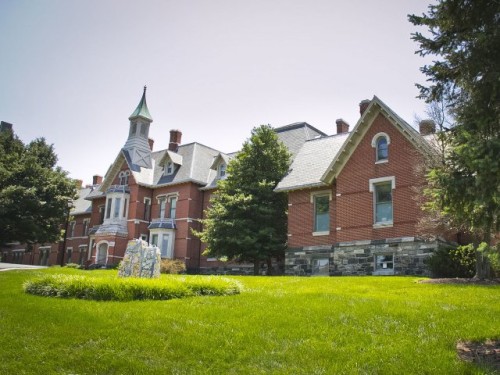
The Retreat at Sheppard Pratt is a psychiatric residential option in Towson. Its private-suite setting should be considered alongside the assessment process and the specific clinical reasons for admission.
Accommodation: Residents stay in private suites with bathrooms. Meals, laundry and structured activities are part of the residential routine. The admission process begins with a telephone screening, and a tour can be arranged.
Ask admissions: Discuss clinical suitability, medication needs and the expected length of stay. Ask who will coordinate discharge and follow-up with your existing clinicians.
Read the full center profile, photos and pricing evidence · Provider information. Profile information checked: 2026-09-17.
2. Ashley Addiction Treatment — Havre de Grace
Current program information for Ashley Addiction Treatment — Havre de Grace describes the following scope: Adult inpatient addiction treatment with medically supervised withdrawal and care for co-occurring mental health concerns. Confirm the exact pathway and level of care after assessment.
Accommodation: Semiprivate hotel-style rooms with two beds and a bathroom shared with one roommate
Ask admissions: Confirm the main-campus track, medical suitability, insurance authorization and next-stage care.
Length of stay: General inpatient stay is individualized; the separate Pain Recovery Program is five weeks. Confirm the individual recommendation and any separate stages.
Read the full profile, photographs, and source notes · Program source. Clinical source review: 2026-10-20. Price evidence may have a separate date, as stated above and in the profile.
3. ClearView Communities — Frederick
Current program information for ClearView Communities — Frederick describes the following scope: Voluntary adult psychiatric rehabilitation for serious and persistent mental illness in staffed Frederick homes; separate diagnostic/evaluation and intensive medication-management programs. Urgent or emergency admissions are not accepted. Confirm the exact pathway and level of care after assessment.
Accommodation: Five non-locked coeducational homes near 611 W Patrick Street, Frederick, MD 21701, with single-occupancy bedrooms; two houses have private bathrooms and others share between two residents. Staff support and transport are provided; exact house/accessibility assigned individually. Supported Living uses the resident’s own housing
Ask admissions: Voluntary adult psychiatric rehabilitation; younger adults are typical but older adults may be considered. Referrals, clinical records and interviews precede committee review. No urgent or emergency admission. Confirm Residential, IDEP or IMMP and current written funding terms.
Length of stay: Main residential program averages 12–18 months, individually reviewed; separate IDEP and IMMP programs last 30 days. Supported Living after residential is a separate time-limited service with independent housing. Confirm the individual recommendation and any separate stages.
Read the full profile, photographs, and source notes · Program source. Clinical source review: 2026-10-20. Price evidence may have a separate date, as stated above and in the profile.
4. Recovery Centers of America — Capital Region
Current program information for Recovery Centers of America — Capital Region describes the following scope: Medical detox, residential addiction and co-occurring care at the Waldorf campus. Confirm the exact pathway and level of care after assessment.
Accommodation: Waldorf residential campus with semi-private rooms and shared clinical, recreation and outdoor spaces; confirm current private-room availability
Ask admissions: Confirm detox needs, clinical pathway, room type, insurance or self-pay terms, medication and medical charges, and continuing-care plan.
Length of stay: Individualized residential care; detox, outpatient treatment and recovery housing are separate stages. Confirm the individual recommendation and any separate stages.
Read the full profile, photographs, and source notes · Program source. Clinical source review: 2026-10-20. Price evidence may have a separate date, as stated above and in the profile.
How to choose residential treatment in Maryland
Ask whether primary mental health treatment or addiction treatment is the main purpose of the proposed admission. The Retreat and ClearView should not be treated as interchangeable with detox-oriented services.
ClearView’s supervised community homes involve a different daily-life model from a hospital-campus residence. Discuss independence, medication support and the expected length of stay.
For Ashley or RCA Capital Region, confirm the detox-to-residential pathway, room occupancy and how family participation fits the actual campus schedule.
Compare the complete cost of the stay
Request a written quote for the named campus, clinical program, room type and length of stay. Ask about assessment fees, detox, medication, outside consultations, transport, deposits, cancellation terms and continuing care. A daily rate multiplied by 30 can be a comparison tool, but it is not proof that the provider sells a 30-day package. Insurance benefits and the amount the resident must pay need separate confirmation.
Are these four Maryland centers all addiction rehabs?
No. The Retreat at Sheppard Pratt and ClearView Communities are included as residential mental health options. Ashley and RCA Capital Region offer addiction-focused care. Clinical eligibility and the proposed level of care must be established separately.
Separate psychiatric rehabilitation from addiction treatment
The Maryland shortlist includes The Retreat at Sheppard Pratt and ClearView Communities alongside Ashley and Recovery Centers of America Capital Region. Their descriptions point to different treatment purposes and timeframes. Before comparing room types, establish whether the person needs psychiatric assessment, longer-term mental-health support, addiction rehabilitation, withdrawal management or another service.
Ask each provider which part of that need it is proposing to address. A service designed around longer-term daily functioning is not interchangeable with a shorter addiction-treatment episode. If more than one kind of support is needed, ask the clinical team how the stages would connect and which organization would take responsibility for the next referral.
Towson, Havre de Grace, Frederick and Waldorf
Use the actual campus addresses when planning admission and family participation. A Maryland provider may be convenient for one household and difficult to reach regularly for another. The relevant comparison includes visits, agreed family sessions, outside medical appointments and the journey home. Ask whether transport between treatment locations is included or arranged separately.
Being nearer to relatives can help with practical involvement, while distance may offer a change from everyday routines. Neither factor should override clinical suitability. Discuss how much contact is useful, whether it can be remote and what the patient wants shared. Make appointments before assuming that relatives should travel or stay nearby for an extended period.
Understand the purpose of a longer residential stay
If a program proposes a longer period of residential support, ask what work is intended during that time and how progress is reviewed. Goals may concern treatment participation, daily routines or readiness for a different setting. They should be described in a way the person can understand, with opportunities to ask questions and revisit the plan.
Financially, a longer stay needs a sustainable budget rather than just an affordable first month. Ask about the expected review schedule, the basis for any extension and the costs of later services. Keep original quoted periods visible. A mathematical monthly equivalent is not evidence that a provider offers a program as a month-to-month purchase.
Identify the clinical responsibilities
Ask who is responsible for psychiatric care, physical health needs and medication decisions within the proposed program. Clarify which professionals are on site and how outside consultations are coordinated. If the person has an established clinician, ask whether that professional can participate in a handover before admission and receive relevant information afterward.
Make the same distinction for after-hours support. Residential staffing, nursing coverage and access to a physician are different arrangements. The program should explain its capabilities and what would require a hospital or another provider. That explanation should relate to the exact campus and service rather than the organization’s full network.
Plan the transition before comparing final offers
Tell the team where the person expects to live after treatment. Ask what support will continue, who will provide the first appointment and how records will reach the receiving clinician. If the next phase involves new accommodation or an outpatient schedule, obtain those details and costs separately. A residential discharge date should not be the first time the household considers these arrangements.
Use our cost guide to compare the complete proposal, and NIMH’s psychotherapy guidance to prepare questions about the work itself. The strongest Maryland comparison is one that distinguishes the clinical purpose, practical living arrangements and continuity plan for each option.
How can I compare a short assessment with longer-term support?
Ask what the proposed phase is intended to achieve and how the next decision will be made. Record whether the fee covers an initial evaluation, an agreed treatment period or ongoing residential support. Different purposes can explain different durations. Clarify what happens when the initial period ends and whether a separate estimate is required for the next phase.
Distinguish an assessment decision from a longer commitment
When a Maryland proposal begins with an assessment, ask what that phase is intended to clarify and what information will be provided afterward. Establish whether the quoted amount covers only the initial evaluation or also the treatment being discussed. If the next phase depends on the findings, ask when the person and their chosen supporters can review the recommendation before making a further commitment. The assessment should not be treated as a guaranteed route into a particular longer program.
Request an explanation of how the findings will be shared with the professional continuing care, with the appropriate consent. A useful handover identifies the questions that were addressed, those still unresolved, and the recommended next steps. This is particularly relevant when comparing services with different purposes: a diagnostic or psychiatric program and an addiction-treatment pathway may produce different kinds of recommendations and follow-up arrangements.
Continue comparing
See our USA luxury rehab guide, treatment cost guide and full treatment-center directory. Use these comparisons to prepare questions for a qualified clinician and the provider’s admissions team.
listed photograph: The Retreat at Sheppard Pratt – Towson; it shows that listed facility, not every center in Maryland. This guide provides information for comparison and does not replace an individual clinical assessment.